


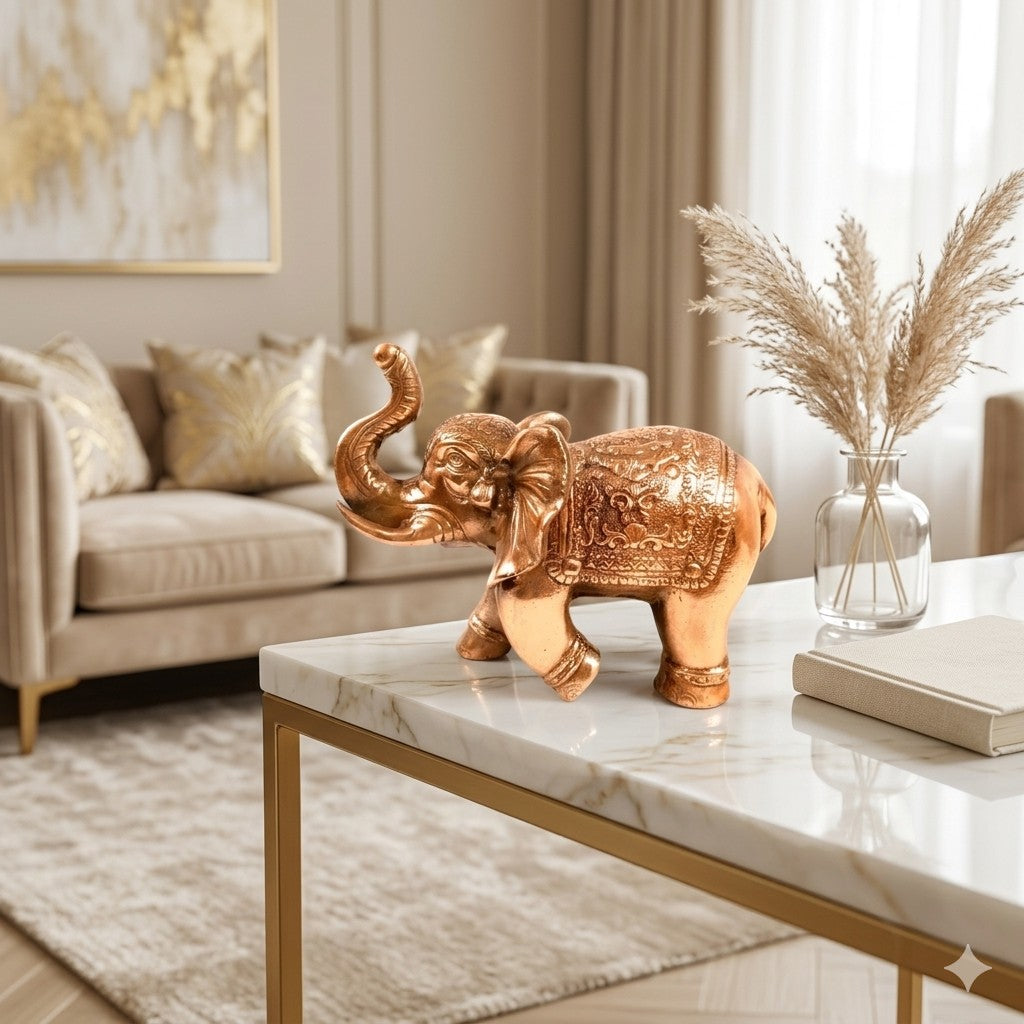
Elephant Figurines for Home: Vastu Placement, Directions & Positive Benefits
Walk into almost any well-loved Indian home and there's a good chance you'll spot — an elephant statue, sitting proudly at the entrance, on a shelf, or anchoring a beautiful corner. And it's no accident. Elephants have held a place of deep reverence in Indian culture, mythology, and Vastu Shastra for thousands of years.
But here's something most people wonder about: Does placement actually matter? Which direction should it face? Should the trunk be up or down? And which showpiece really brings wealth and good luck?
We've got all of that covered — and more. Think of this as your friendly, no-jargon guide to getting the most out of your elephant decor. Let's dive in.

What's Inside This Guide
-
Why Elephant Idols Are Considered Lucky
-
Spiritual Meaning — Strength, Wisdom & Prosperity
-
Trunk Up or Down? The Big Question Answered
-
Where to Keep Elephant Statue at Home (Room by Room)
-
Vastu Direction Guide — Which Direction Is Best?
-
Entrance Styling — Invite Protection & Good Fortune
-
Best Elephant Decor for Wealth & Prosperity
-
Placement Mistakes You Should Avoid
Why Elephant Idols Are Considered Lucky
There's something timeless about the elephant's presence in Indian tradition. Long before it became a popular home decor item, the elephant held sacred significance across multiple belief systems — Hinduism, Buddhism, and Vastu Shastra all agree on one thing: elephants bring good fortune.
In Hindu tradition, the elephant is most closely associated with Lord Ganesha — known as the remover of obstacles and the harbinger of new beginnings. His distinctive elephant head represents intelligence, wisdom, and divine safeguarding.
Because of this deep spiritual and mythological relevance, elephants hold a special place in everyday Indian culture and home décor practices. According to traditional beliefs and Vastu Shastra principles, elephant figurines are often placed in homes to attract positive energy, good health, prosperity, and fortune.
In Buddhism as well, elephants are highly respected and symbolize patience, resilience, and inner strength—qualities that every household aims to cultivate.
💡 Good to Know: Presenting an elephant statue as a gift is considered a meaningful gesture of goodwill. In Indian customs, such a gift is seen as a symbol of blessings, especially when given with sincerity and positive intent.

Elephant Statue in Home Decor: Meaning, Symbolism & Benefits
Spiritual Meaning of Elephant Showpieces: Strength, Wisdom & Prosperity
The elephant is a multi-layered symbol. Every quality it represents is something we'd all love woven into our living space:
Strength & Power: The elephant stands as a symbol of wisdom and strength, denoting immense intellectual depth and physical sturdiness — and also patience to achieve a goal, no matter how daunting it may seem.
Intellectual Growth: Elephant statues—especially those with an upward-facing trunk—are believed to encourage learning, clarity of thought, and mental development.
Protection: In Feng Shui, elephants are regarded as guardians of the home. When placed near the entrance, they are thought to shield the space from negative energies and unwanted influences.
Prosperity: Since ancient Vedic times, elephants have been associated with abundance and success. They are often depicted alongside Goddess Lakshmi and are closely connected with Lord Ganesha and Gautama Buddha—symbolizing wisdom, strength, and peace.
Family Harmony: Elephants are known for their deep familial connections and protective instincts. Figurines, especially those showing a mother with her calf, represent unity, care, and strong family bonds.

Elephant Statue for Home — Vastu Benefits, Placement & Spiritual Significance Explained
An elephant statue for home is not just a decorative accent—it carries deep spiritual and Vastu significance. As per Vastu Shastra, placing an elephant figurine in the correct direction can invite positivity, wisdom, and prosperity into your space. It is believed to attract abundance, protect against negative influences, and strengthen harmony within the household. Whether crafted in brass, marble, or wood, a thoughtfully placed elephant showpiece in areas like the entrance, living room, or bedroom can uplift the overall energy of your home.
Trunk Up or Down Elephant — Which One Is Right for Your Home?
This is the most common question when it comes to elephant decor. And the answer isn't "one or the other" — it depends on what you want to invite into your life.
Trunk Up or Down Elephant — Which One Should You Choose?
One of the most frequently asked questions about elephant décor is whether the trunk should be raised or lowered. The truth is, both forms are considered auspicious—it simply depends on the kind of energy and intention you wish to bring into your life.
Trunk Up vs Trunk Down: Understanding the Difference
🐘 Upward Trunk — Symbol of Luck, Growth & Protection
An elephant with a raised trunk is considered highly auspicious and is often linked with prosperity, achievement, and positive vibrations. It is believed to attract blessings, help overcome challenges, and encourage progress, making it a great choice for placement in entrances, living spaces, and work areas.
🐘 Trunk Lowered — For Stability & Balance
A downward-facing trunk represents grounding, stability, and steady progress. It is often associated with calmness, longevity, and nurturing energy. This style works best in bedrooms or peaceful corners of the home.
🐘 Inward-Curved Trunk — For Inner Growth
An elephant with its trunk gently curved inward symbolizes focus, mindfulness, and spiritual awareness. It is a great addition to meditation zones or prayer spaces.
💡 Quick Tip: Choose a raised trunk for prosperity and achievement, or a lowered trunk for emotional balance and long-term stability. Both hold positive significance—it depends on your intention.

Where to Place an Elephant Statue at Home? Room-by-Room Guide
Vastu is quite specific about this, and it makes intuitive sense once you understand the energy of each room.
Where to Place Your Elephant Showpiece for Maximum Vastu Benefits
🚪 Main Entrance Place a pair of elephants on either side of the main door, trunks raised and facing inward. This positioning acts as a spiritual shield, welcoming only positivity and good fortune into the home.
🛋️ Living Room An elephant figurine in the living room represents peace, wisdom, and strong family bonds. Position the statue in the north direction to boost professional success and wealth. A herd of elephants with entwined trunks reinforces family ties.
🛏️ Bedroom
In bedrooms, elephant figurines are associated with emotional balance and relationship harmony. A pair of elephants can symbolize love, togetherness, and mutual understanding, making them suitable for couples.
💼 Home Office / Study Area
Keep an elephant statue in the north or northeast direction to enhance focus, clarity, and career opportunities. A single elephant supports concentration, while multiple elephants can represent growth and progress.
🧒 Children's Room Place a calm, joyful-looking elephant near the study desk or bed. Elephant statues in children's rooms enhance focus, wisdom, memory, and academic success.
🪔 Puja / Meditation Space Alongside deity idols, an elephant statue enhances spiritual energy and divine protection — particularly when paired with a Lord Ganesha idol.
Vastu Direction Guide — Which Direction to Keep Elephant Statue at Home?
Direction is everything in Vastu Shastra. Each compass direction carries specific energy, a ruling deity, and distinct benefits.

Best Directions for Elephant Statue Placement as Per Vastu
⬆️ North Direction — Wealth & Career The north direction is ruled by Lord Kuber, the deity of wealth. Placing Vastu elephants herem
encourages financial stability. This is the most favorable direction for prosperity and career success.
➡️ East Direction — Harmony & New Beginnings The east direction, associated with sunrise and new beginnings, promotes harmony and strong family bonds. East-facing elephants near the main entrance are ideal for welcoming positivity.
↗️ North-East Direction — Wisdom & Spirituality The most sacred zone in Vastu. Placing an elephant here enhances clarity of mind, spiritual wellbeing, and meditation practice.
⬇️ Avoid: South & South-West Avoid placing elephant statues in the south and south-west directions — these are considered less ideal as per Vastu principles.
💡 Universal Rule: Elephants should face into the room, not towards doors or windows, to attract and retain positive energy and fortune within the home.
Elephant Statue at Entrance: Vastu Tips for Protection & Good Luck
Why the Entrance Is the Most Powerful Spot for Your Elephant Idol
The main entrance of a home is where all energy — good and bad — enters first. Placing elephant statues here is one of the most powerful Vastu moves you can make.
Positioning a pair of elephant statues near the entrance, facing outward, is believed to form a protective shield that helps keep negative energies away from the home.
In Indian tradition, elephants are also seen as symbols of warmth and hospitality. When placed at the doorway, they create a welcoming ambiance for visitors while reflecting a sense of safety, harmony, and positive intent within the household.
💡 Entrance Tip: For best results, place a pair of metal or stone elephants on either side of the main door with their trunks raised and facing inward. This arrangement is thought to safeguard the home while attracting prosperity and positive energy inside.
Common Mistakes to Avoid When Placing Elephant Statues at Home
Getting the placement right is just as important as avoiding the wrong ones. Here are the key things Vastu says to steer clear of:
-
🚫 Never place elephant statues in bathrooms or near washrooms — this disrupts the positive energy they carry.
-
🚫 Don't place them directly on the floor — placing the elephant statue on a shelf, table, or pedestal honors its spiritual significance and helps maximize its energy flow throughout the space.
-
🚫 Avoid angry or aggressive-looking depictions — always choose calm, joyful expressions for your showpiece.
-
🚫 Don't face the statue toward doors or windows — elephants should face into the room to attract and retain positive energy and fortune within the home.
-
🚫 Avoid cluttering around the statue — a clean, minimal space around the statue allows its energy to be more potent and undiluted.
-
🚫 Never keep a broken or chipped statue — a damaged idol is considered inauspicious in Vastu and should be replaced promptly.

Explore More on ApkaMart
Ready to bring home your perfect elephant showpiece? Browse our handpicked collection of Elephant Statues & Showpieces - from alloy and wooden to marble and resin idols. If you love Vastu-inspired decor, you'll also enjoy our range of Vastu Home Decor Items, Feng Shui Decor Pieces, Lord Ganesha Idols, and Decorative Showpieces for Home. Looking for a thoughtful housewarming gift? Our Gifting Collection has you covered.
Final Thoughts
There's a reason the elephant statue has stood the test of time in Indian homes — it's not just about superstition or tradition. It's about intention. When you choose a beautiful elephant showpiece, place it thoughtfully, and care for it, you're essentially creating a small pocket of peace and purpose in your home.
Whether you believe deeply in Vastu or you simply love the meaning and beauty behind these majestic creatures, an elephant statue is one of the most meaningful, elegant, and timeless additions you can make to any living space.
Start with one. Choose with care. And watch how the energy of your home shifts.
Shop our curated collection of Vastu-approved elephant statues — alloy metal, wood, marble, polyresin, and more — at ApkaMart 🐘

Written by Apka Mart


Leave a comment
This site is protected by hCaptcha and the hCaptcha Privacy Policy and Terms of Service apply.